Alexandra AVROS
Practice
Not painted. Revealed.
Alexandra AVROS approaches the surface as an active material field. Dark, dense surfaces are built and worked through abrasion, sanding, erasure and removal. Form and light emerge through what is exposed and what remains. The surface retains pressure, friction, residue and touch.
“Not painted. Revealed.” describes this formative principle. It does not mean that no material is applied: building the surface and working it back are part of the same process.
The Withheld Passage — documented stages
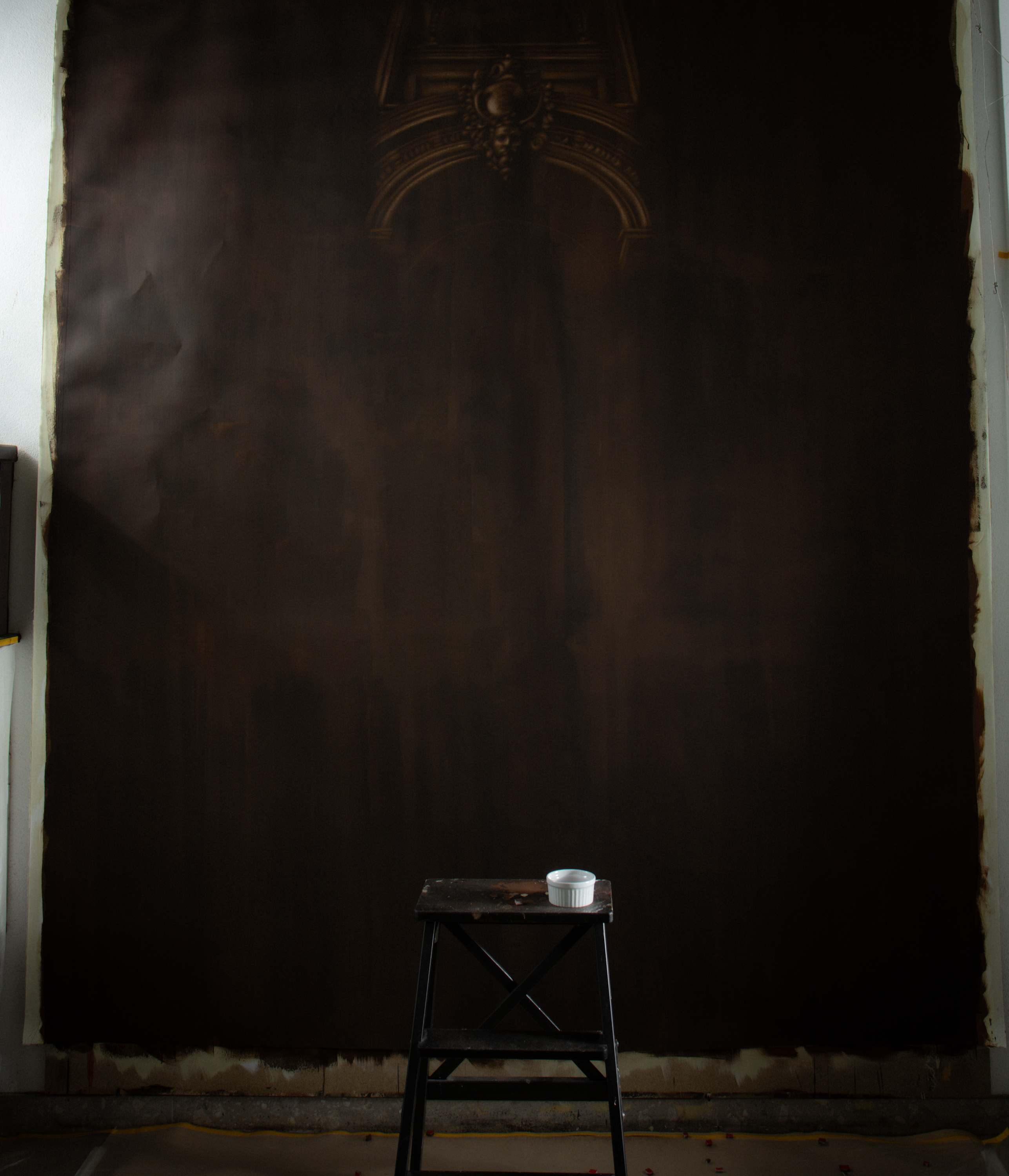
Early documented stage.
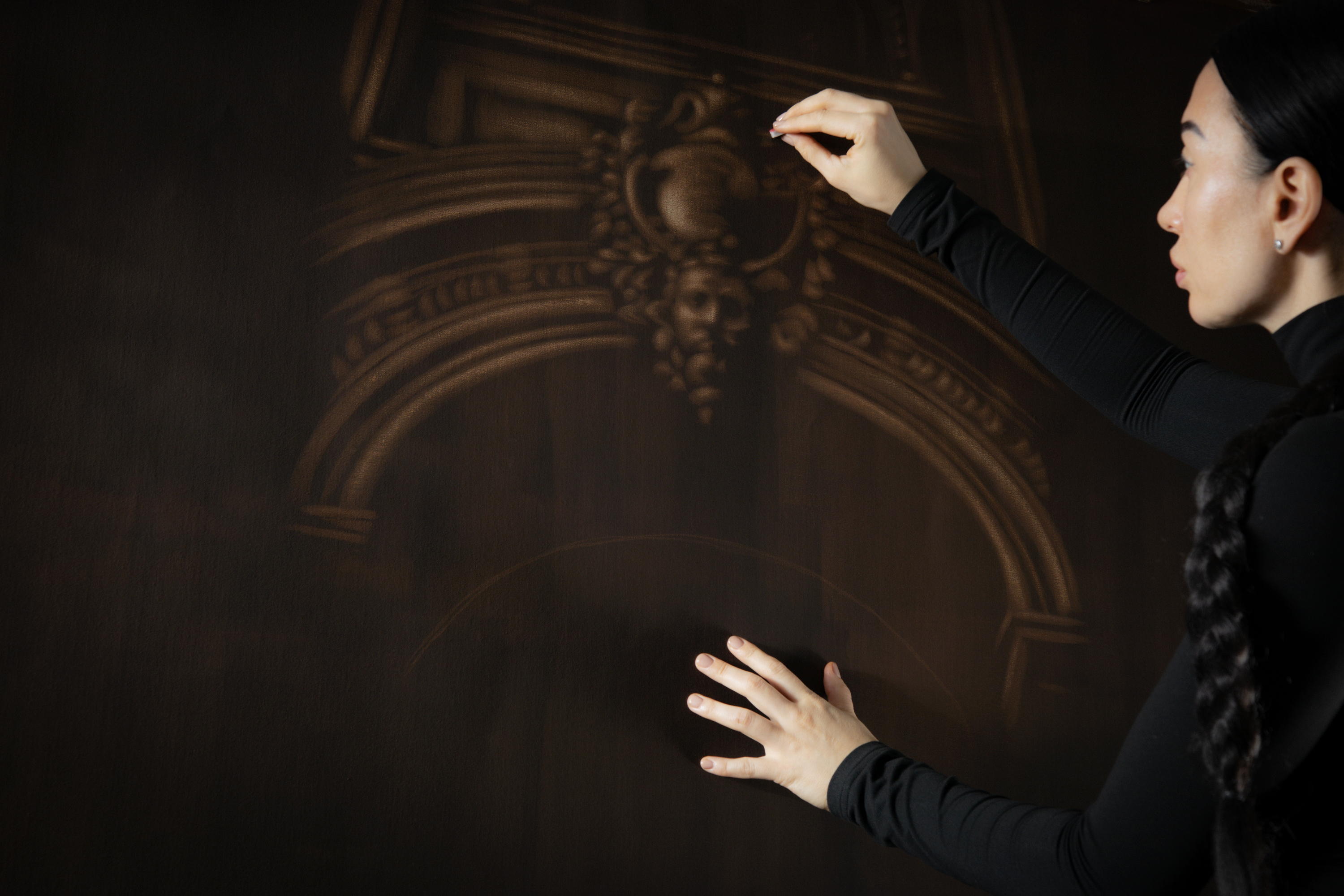
Artist working on the surface.
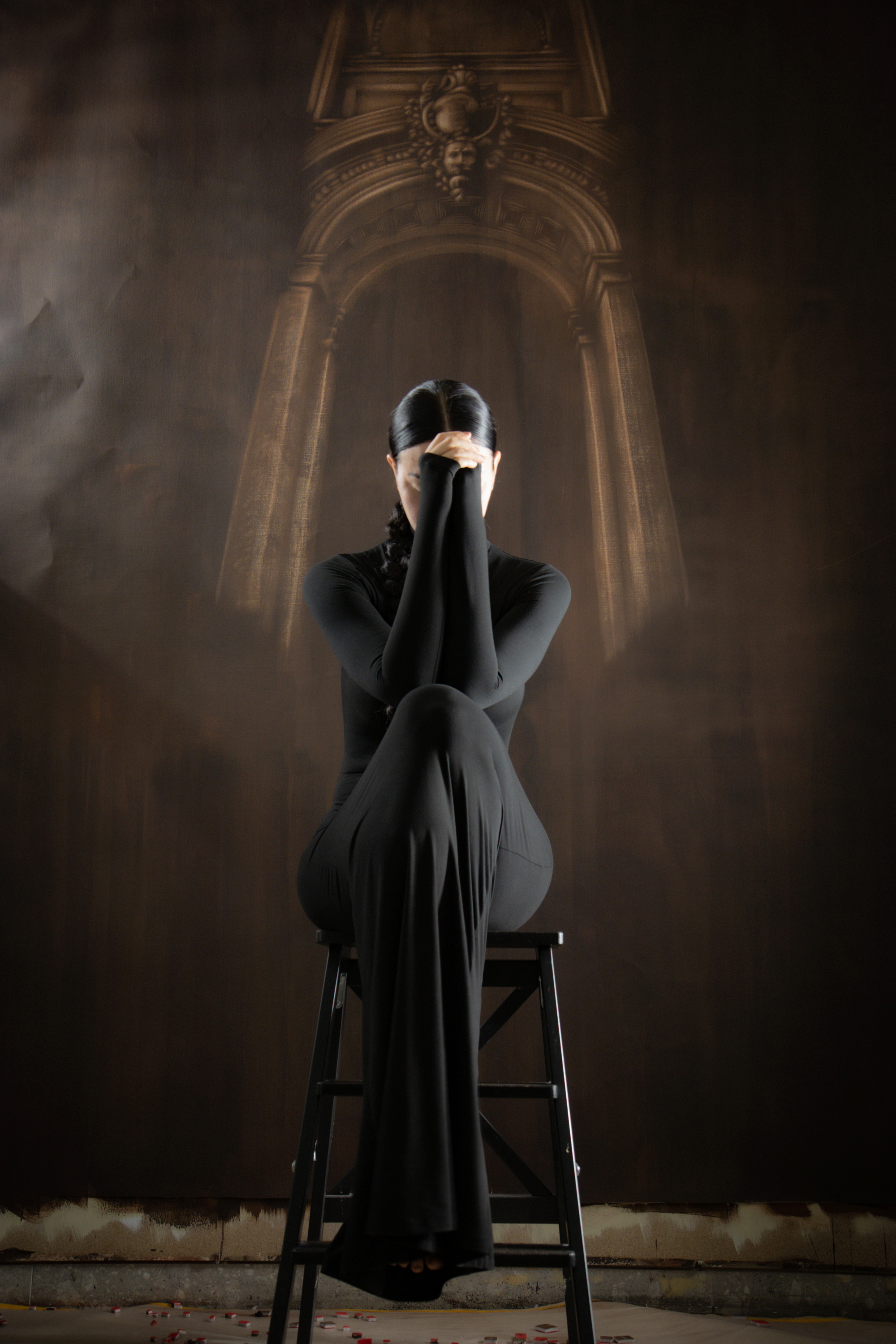
Intermediate state.
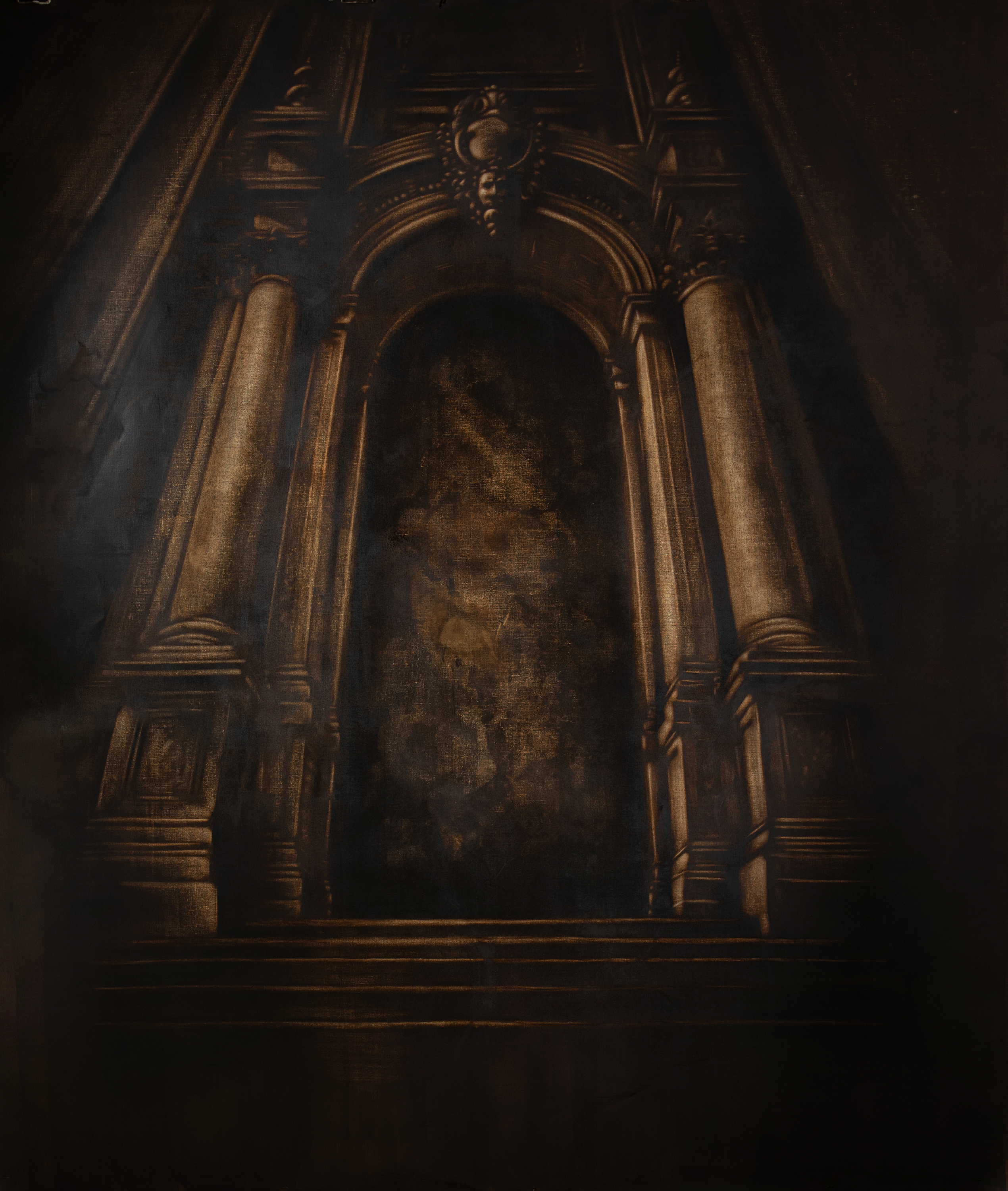
Completed artwork.
Creation narrative
My practice begins with a question of form: what exists before something is named, interpreted, or assigned a fixed meaning.
I work primarily with large-scale mixed-media painting, developing long-term bodies of work in which vessels, spirals, traces, thresholds and other recurring structures appear, dissolve and return. I am interested less in what these forms represent than in what organises them — repetition, pressure, absence, gravity, rhythm, memory and the physical behaviour of matter.
The surface is central to my practice. I build dark, dense fields and then work through processes of abrasion, removal, sanding, erasure and return. Light and form are not simply applied to the canvas; they are gradually revealed from within it. The image often emerges as though it had been held in the material before it became visible.
This process leaves evidence. Friction, pressure, residue, irregularity and touch remain embedded in the surface. For me, matter is not a neutral support for an image. It participates in the work and retains the history of its making.
I am drawn to forms organised around what cannot be fully seen: an empty centre, a gap, a threshold, a point of tension or disappearance. Absence is therefore not the opposite of form. It can become the force that determines form.
My work does not seek to reconstruct the past or illustrate fixed symbols. It moves toward structures that seem to precede explanation and yet continue to recur across time.
Painting, for me, is a way of investigating what remains when names, functions and narratives fall away — and how matter, through form, can continue to hold presence.
Looking at a work
The Atlas offers four ways of looking at a work, wherever verified documentation is available.
Whole
The work in its entirety: its composition and the relationships within its boundaries.
Surface
A closer view of material, marks and texture. A detail is a partial view of the work, not a separate work.
Scale
The work in relation to a body, a room or its surroundings. Dimensions remain factual information in the artwork record.
Process
Documentation of making. It shows an observed stage or action; it does not necessarily describe the complete sequence of production.
These views are different forms of evidence, not four stages that every work must pass through. A view is included only when suitable documentation exists.
Between works
Atlas brings existing works into relation. A directional relationship describes movement between states of form; it does not establish chronology, causation or a study-to-final sequence. A comparative relationship has no established transformational direction. A work may stand without an Atlas relationship.